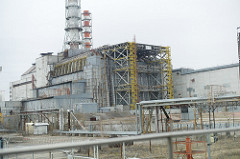
 On
April 26, 1986, a nuclear reactor at a place called Chernobyl (Ukraine, eastern
Europe) blew up, opening up the burning and melting reactor core to the sky. It
was one of the worst industrial accidents ever. At least 2,500 people have died
and thousands more, mostly young kids, got cancer of the thyroid gland. Many more
people will die because of the radiation and a big area of what used to be good
farm land is now radioactive and no people can go there unless they wear special
radiation suits. The reactor was eventually made safe by covering it in thick
concrete.
On
April 26, 1986, a nuclear reactor at a place called Chernobyl (Ukraine, eastern
Europe) blew up, opening up the burning and melting reactor core to the sky. It
was one of the worst industrial accidents ever. At least 2,500 people have died
and thousands more, mostly young kids, got cancer of the thyroid gland. Many more
people will die because of the radiation and a big area of what used to be good
farm land is now radioactive and no people can go there unless they wear special
radiation suits. The reactor was eventually made safe by covering it in thick
concrete.
It's not all bad though because the contaminated area is now becoming an unintended wildlife reserve showing that living things can thrive even if there is a certain amount of radiation. Of course, the radiation levels are quite low and nothing like those of the radioactive cloud which spewed out of the broken reactor after it blew up. This cloud travelled round much of the Northern Hemisphere, polluting lands as far away as Britain. The Chernobyl-type RBMK reactors have now mostly been closed down and it is fair to say that most reactors in use are much more secure. This is because they have built-in safety systems which include containment: usually a massive dome built of reinforced concrete which is designed to contain serious accidents like that at Chernobyl (which had no containment). In one other serious reactor accident which has happened - at Three Mile Island in the USA - the containment worked as intended and almost no radiation escaped at all.